Is a Broken Garage Door Spring Dangerous? Safety Rules
You heard a bang like a gunshot from the garage at 6 AM, and now the door won’t budge. Your first question — is this actually dangerous, or just inconvenient? — is the right one to ask, because a broken garage door spring is the single most dangerous common garage door failure. Here’s how to stay safe until help arrives. Call (513) 286-7477 for 24/7 emergency spring service in Hamilton, OH.
Is a Broken Garage Door Spring Dangerous? Yes
A wound torsion spring stores an enormous amount of energy — enough to lift a 200+ pound door with one finger when it’s working. When it breaks, that energy releases violently, which is why the failure sounds like an explosion. But the ongoing danger isn’t the broken spring itself; it’s the 100 to 400 pounds of uncounterbalanced door now hanging on tracks, cables, and an opener that was never designed to hold it alone.
Garage doors send people to emergency rooms every year, and spring work is among the most dangerous repairs on any door. Even professional technicians get hurt working on springs — which tells you everything about whether this is a DIY job. (It isn’t. More on that below.)
What Does a Broken Garage Door Spring Look Like?
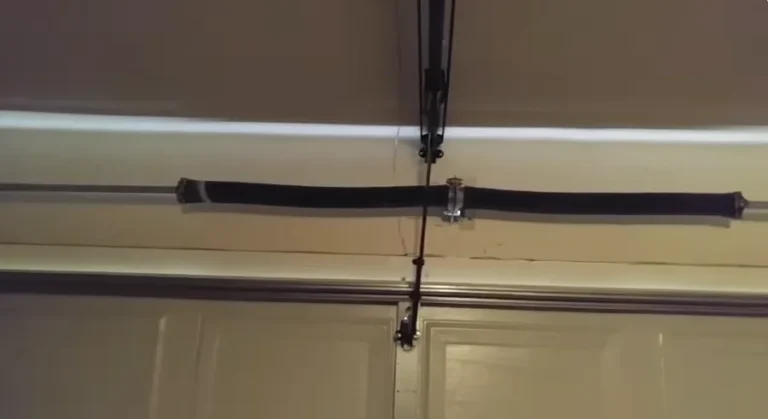
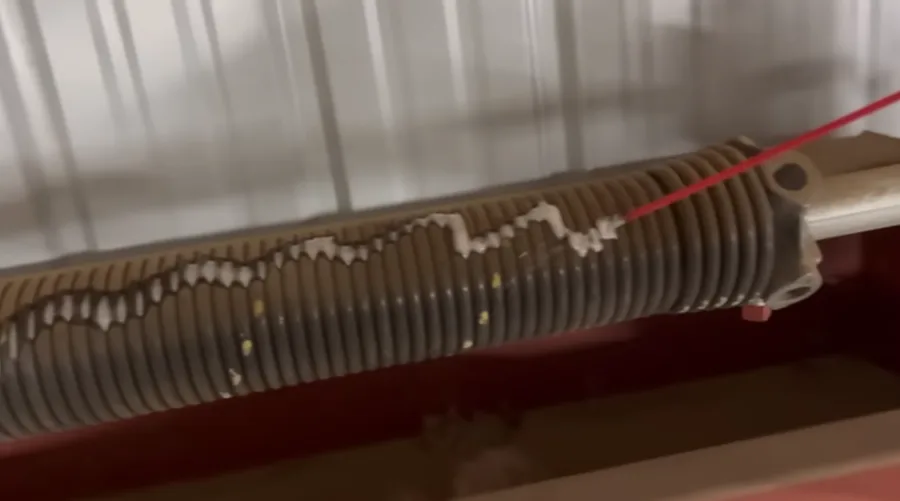
- Torsion spring (on the bar above the closed door): a visible gap of an inch or more between two sections of the coil, where it used to be one tight, continuous coil.
- Extension springs (along the horizontal tracks on each side): one spring is stretched out, hanging loose or missing a piece, or a safety cable is the only thing holding it.
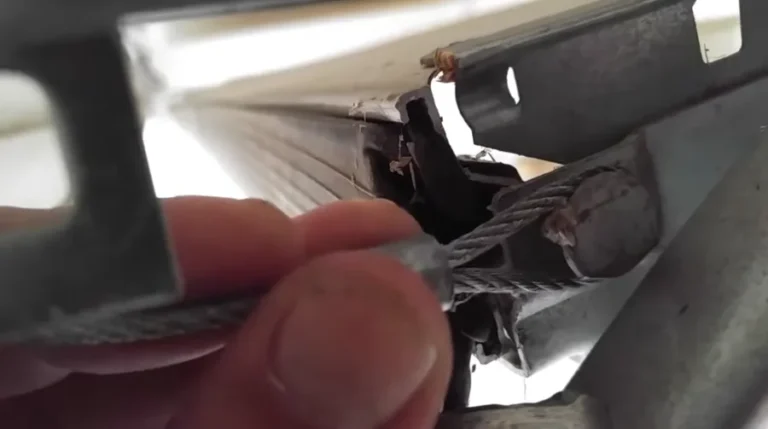
- The door itself: it rises only a few inches, opens crooked, feels extremely heavy if you try to lift it by hand, or the cables hang slack beside the door.
- The opener: it hums, strains or reverses, and the door barely moves.
Look, but don’t touch the spring, the cables or the winding cones. If you can see any of these signs, keep the door where it is and read about garage door spring repair in Hamilton: what the job involves and what it typically costs.
Why You Should Never DIY a Broken Garage Door Spring
YouTube makes it look straightforward: unwind the old spring, wind the new one, done. What the videos don’t convey is what happens when a winding bar slips. A torsion spring under full tension can whip a steel winding bar with enough force to break bones, and a spring end that lets go mid-wind becomes a projectile. Emergency rooms see the results every spring — usually from confident DIYers who “do their own car brakes.”
The honest cost comparison: a professional spring replacement in Hamilton runs a few hundred dollars and takes under an hour. A DIY attempt risks your hands, your face, and — if you wind it wrong — a door that crashes down later. This is the one garage door repair where calling a pro isn’t upselling; it’s the only sane option.
If the Door Is Stuck Open Overnight
A door stuck open with a broken garage door spring is a security problem, not just a repair problem. Do this, in order:
- Lock the interior door between the garage and the house, and keep it locked until the door is fixed
- Move valuables out of the garage — tools, bikes, anything visible from the street
- Park a car across the opening as a physical deterrent if you have a second vehicle
- Don’t try to force it closed — an uncounterbalanced door can slam down with hundreds of pounds of force
- Call 24/7 emergency service — a good company will come out overnight for exactly this scenario
- If you feel unsafe, call the non-emergency police line and let them know your garage is unsecured overnight
If the Door Is Stuck Closed
Count your blessings — with a broken garage door spring, stuck closed is the safer failure. Leave it closed. Do not pull the emergency release cord on a door with a broken spring: with no spring counterbalance, the unsupported side of the door can drop suddenly once released from the opener trolley, and a falling 200-pound door injures whatever is underneath it. Your car stays in the garage until the tech arrives. It’s inconvenient for one morning; it’s not worth a crushed hand.
Can I Lift It Just Once to Get My Car Out?
We get asked this constantly, and the answer is no — don’t. With a broken garage door spring you’re lifting the door’s full dead weight: 100 to 400 pounds depending on the door. Even if you’re strong enough to get it up, you have to hold it there while someone drives out, and if your grip slips, the door free-falls. People have been seriously hurt trying “just once.” Take the other car, call a rideshare, or be late — all cheaper than an ER visit.
Did I Damage My Opener Running It After the Break?
Possibly. Every time the opener tries to lift a door with a broken garage door spring, the motor strains against weight it was never built for. Common damage: a stripped nylon drive gear (the sacrificial part — a $25 part but a service call to replace), an overheated motor, or a burned-out capacitor. If you hit the button “a few times” hoping it was a fluke, mention it to the tech — they’ll inspect the opener during the spring visit and test it under load before leaving. Catching gear damage now beats discovering a dead opener next month. If the opener now hums or won’t move the door even after the spring is fixed, see garage door opener repair.
What the Technician Will Do
A proper spring visit isn’t just swapping a coil. Expect the tech to replace both springs (the survivor is as fatigued as the one that broke), inspect the cables (they often fray or jump the drum when a spring lets go), re-tension and balance the door, lubricate the hardware, and run full safety-reversal tests on the opener. The whole job typically takes 45–60 minutes. Ask for the cycle rating of the new springs in writing. If the spring simply wore out, read how long garage door springs last.
Bottom line: treat a broken garage door spring as an emergency, not a weekend project. Keep people and pets clear, leave the door where it is, and let a trained technician release and replace the spring. For general garage door safety guidance, see the U.S. Consumer Product Safety Commission.
Other Garage Door Repair Services in Hamilton
🚨 24/7 Emergency Garage Door Repair
spring snapped overnight or door stuck open? call for emergency help
🔩 Garage Door Spring Repair in Hamilton OH
same-day torsion & extension spring replacement
❓ Garage Door Repair FAQ
more common garage door questions answered
📞 Contact Us
schedule a safety inspection
Frequently Asked Questions
Is it safe to stay in the house with a broken garage door spring?
Yes, with normal caution. The broken garage door spring itself isn’t going anywhere — the danger is the uncounterbalanced door. Don’t operate the door, keep kids and pets away from it, and if it’s stuck open, lock the interior door to the house until it’s repaired.
Can the door fall on its own with a broken garage door spring?
If it’s resting fully closed, it’s stable — leave it alone. The risk comes from trying to move it: pulling the emergency release or forcing it can let hundreds of pounds drop suddenly. Never stand under a partially open door with a broken spring.
Can I lift the door manually just once to get my car out?
Don’t. You’re lifting 100–400 pounds of dead weight, and if your grip slips the door free-falls. People are seriously injured this way every year. Use another vehicle or wait for the tech — it’s one morning of inconvenience versus a real injury risk.
How dangerous is DIY spring replacement, really?
Extremely. Winding a torsion spring stores enough energy to break bones if a winding bar slips, and a spring end that lets go becomes a projectile. Even professional techs get hurt on springs. This is the one garage door repair that is never a DIY job.
The door is stuck open overnight — how do I secure the house?
Lock the interior door between garage and house, move valuables out of sight, park a second car across the opening as a deterrent, and call 24/7 emergency service. If you feel unsafe, call the non-emergency police line to report the unsecured garage.
Will my opener be damaged if I ran it with a broken garage door spring?
Possibly — the motor strains against dead weight it wasn’t designed for, which can strip the nylon drive gear or overheat the motor. Tell your tech you ran it; they’ll inspect the opener under load during the spring visit.
After one broken garage door spring, should both be replaced?
Yes. Both springs share the same age and cycle count, so the surviving spring is nearly as fatigued. Replacing both costs little extra in parts and prevents a second emergency visit weeks later.
Why do springs always break in the early morning in winter?
Cold makes spring steel brittle while making the door heavier — thickened lubricant, stiff seals, frost drag. The first hard cold snap puts peak stress on an already-fatigued spring, which is why that 6 AM bang is a Butler County winter classic.
How long does it take to fix a broken garage door spring?
Typically 45–60 minutes for both springs, including cable inspection, rebalancing, lubrication, and safety-reversal testing. Same-day service is standard — you won’t be stuck long.
Need Help in Hamilton, OH?
Spring snapped? Door stuck open? Don’t touch it — call someone who does this every day. A qualified technician should replace both springs in one visit, check your cables and opener, and balance the door before leaving. 📞 Call (513) 286-7477 for 24/7 emergency service anywhere in Hamilton, OH — or request service online.
Similar Posts
Garage Door Weather Stripping in Hamilton, OH: Stop Drafts Before Winter
Garage Door Weather Stripping in Hamilton, OH: Stop Drafts Before Winter If your garage feels cold in November, even with the door closed, garage door weather stripping is the first place to check. It is a set of rubber and vinyl strips that seal the gaps around your garage door, and when it fails, cold…
Garage Door Opener Slow or Humming in the Cold? Here’s Why
Every January in Butler County, the same service calls roll in: “My garage door opener worked fine in October, but now it hums, crawls, or gives up halfway.” If your LiftMaster, Chamberlain, or Genie opener is struggling on sub-freezing Hamilton mornings, the cold is almost certainly exposing a problem — not creating one out of…
How Long Do Garage Door Springs Last in Ohio? The 10,000-Cycle Math
If one of your garage door springs snapped after just six years, you’re probably wondering whether that’s normal — or whether someone sold you a cheap part. Here’s the truth most homeowners in Hamilton never hear: garage door springs aren’t rated in years at all. They’re rated in cycles, and once you do the math,…
Is an Insulated Garage Door Worth It in Ohio? Real Numbers
“Will an insulated garage door actually lower my heating bill, or is that just marketing?” It’s the most honest question a homeowner can ask — and the answer is: it depends entirely on your garage. For some Hamilton, OH homes, insulation pays for itself in a few years. For others, it’s money you’ll never see…
Broken Garage Door Cable Repair in Hamilton, OH
If your garage door is suddenly hanging crooked — one side higher than the other — or you spot a loose garage door cable dangling by the bottom corner, you’ve likely got a broken garage door cable. This is one of the few garage door failures where the door can genuinely drop without warning. Here’s…
Why Is My Garage Door So Noisy in Hamilton, OH? 7 Sounds and What They Mean
Why Is My Garage Door So Noisy in Hamilton, OH? 7 Sounds and What They Mean A noisy garage door in Hamilton, OH is easy to ignore at first, especially when the door still opens and closes. The sound usually starts small, a faint squeak in the morning or a rattle you only notice when…