Why Is My Garage Door So Noisy in Hamilton, OH? 7 Sounds and What They Mean
Why Is My Garage Door So Noisy in Hamilton, OH? 7 Sounds and What They Mean
A noisy garage door in Hamilton, OH is easy to ignore at first, especially when the door still opens and closes. The sound usually starts small, a faint squeak in the morning or a rattle you only notice when the house is quiet. Over weeks and months, that small sound often grows louder, and by then the part causing it may be worn, loose, or close to failing. A noisy garage door is rarely just an annoyance, because sound is the earliest warning a door gives before a roller seizes, a track bends, or a spring breaks.
This guide helps you work out what your noisy garage door is telling you, in plain language, without guessing. You will learn how to listen for when the sound happens and where it comes from, what squeaking, grinding, rattling, popping, banging, and motor rumbling usually mean, and which fixes are safe to do yourself. It also tells you clearly which jobs to leave alone, because springs, lift cables, and bottom brackets are under tension and can cause serious injury. If your noisy garage door suddenly sounds very different, moves unevenly, or feels heavy, stop using it and call (513) 286-7477.
Hamilton weather makes this topic timely, because cold mornings, road salt, and freeze and thaw cycles dry out lubricant, stiffen seals, and let grit build up in tracks. A door that ran quietly in summer can turn into a noisy garage door by November, and the same cold that makes metal contract can make panels pop as they expand and shrink. The checks in this guide take about twenty minutes, need only a rag, a socket wrench, and a can of garage door lubricant, and they can save a small tune-up from turning into a track, roller, or opener repair.
Key Takeaways: Noisy Garage Door
- A noisy garage door usually points to one of seven sounds: squeaking, grinding, rattling, popping, banging, chain slap, or motor rumbling.
- Squeaking usually means dry hinges, rollers, or springs, and it is the easiest sound to fix with the right lubricant.
- Grinding, a single loud bang, a door that moves unevenly, or a visible gap in a spring all mean stop and call a technician.
- Never grease the inside of the tracks, never use a penetrating oil as a long-term lubricant, and never touch springs, lift cables, or bottom brackets.
- Tightening loose hardware, cleaning tracks, and lubricating twice a year keep most doors quiet in Hamilton, OH.
Quick Answer: Why Is My Garage Door So Noisy?
A noisy garage door in Hamilton, OH is most often caused by dry hinges and rollers, loose hardware, worn rollers, a bent or dirty track, a loose chain, or a straining opener. Squeaking usually means dry metal that needs silicone or lithium garage door lubricant, rattling usually means loose bolts, and grinding usually means worn rollers or a track problem that needs a technician. A single loud bang, followed by a door that suddenly feels very heavy, usually means a broken spring, so stop using the door at once and call a technician. This guide matches each sound to its cause, shows the safe fixes step by step, and explains the quiet upgrades that make the biggest difference.
How to Diagnose a Noisy Garage Door: Listen First
Before you reach for a spray can, spend one full cycle just listening to your noisy garage door, because the type of sound is the single most useful clue. Stand back from the door, keep people and pets clear, and run it once up and once down while you watch and listen. Note whether the sound happens only when opening, only when closing, through the whole cycle, or only at the start or end of travel. Also note where it seems to come from: the top of the door, one side, the tracks, the springs above the door, or the motor unit on the ceiling.
A sound that happens only when opening often points to the lifting parts under load, such as springs or rollers, while a sound that happens only when closing can point to a track problem or a door dropping too fast. A sound through the whole cycle usually means dry or worn parts that need lubrication or replacement, and a sound only at the start or end often means loose hardware or a door slightly out of alignment. Write down what you hear in your own words, such as squeak, grind, rattle, pop, bang, or rumble, and use the sections below to match it. If two sounds happen together, such as grinding plus uneven movement, treat the more serious one as the priority and stop if the door binds, tilts, or jerks.
- Only when opening: lifting parts under load, such as springs, cables, or rollers.
- Only when closing: track trouble, worn rollers, or a door dropping too fast at the end of travel.
- Through the whole cycle: dry or worn parts, such as hinges, rollers, or springs.
- Only at the start or end: loose hardware, a loose chain, or slight misalignment.
- From the motor unit only: a chain, belt, or drive gear problem, not the door itself.
- Suddenly, not gradually: a broken part, such as a spring, hinge, or roller, rather than normal wear.
Squeaking or Squealing: A Noisy Garage Door That Needs Lubricant
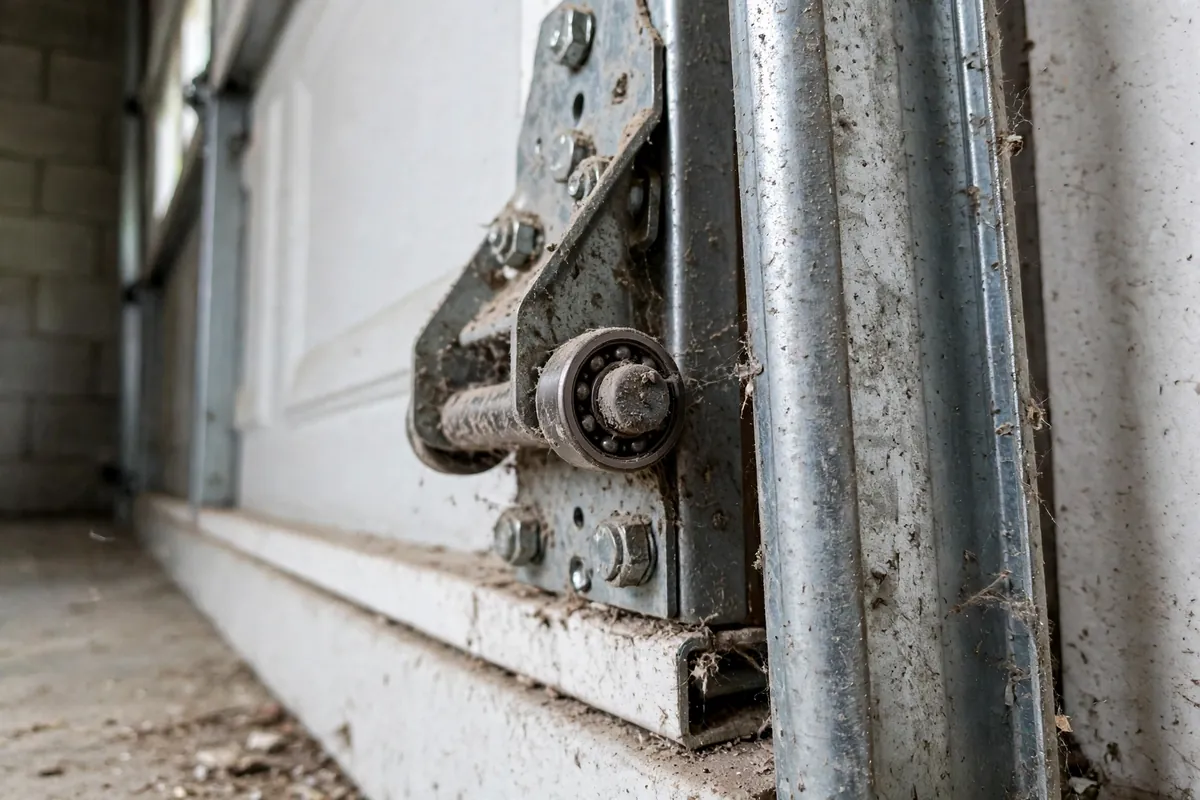
Squeaking or squealing is the most common sound from a noisy garage door, and it is usually the least serious. Each hinge joining the door sections flexes every time the door bends around the curved track, and each roller rides in the track on a small stem, often with a bearing inside the wheel. When the lubricant on those parts dries out, the metal starts to sing, and cold or damp weather in Hamilton makes the squeak worse because lubricant thickens and metal contracts. A squeak that rises and falls as the door moves, and that is louder on cold mornings, almost always points to dry hinges or rollers.
The fix is a can of garage door lubricant, either a silicone spray or a white lithium grease spray made for the job, applied as described in the lubrication section below. Run the door through two full cycles after lubricating, because a door squeaking purely from dryness often goes nearly quiet by the second cycle. Do not use a penetrating oil as your lubricant, because it is mainly a cleaner that dries out fast and leaves the parts drier than before. Do not grease the inside of the tracks, because grease there collects grit and makes rollers slide instead of roll. If the squeak continues after proper lubrication, or if rollers look cracked, flat, or badly corroded, the rollers are likely worn and need replacing by a technician.
Grinding or Scraping: A Noisy Garage Door You Should Not Ignore
Grinding or scraping is more serious than a squeak, because it usually means metal is contacting metal when it should not. A noisy garage door that grinds often has worn roller bearings, a roller that has stopped rolling and started sliding, a bent or misaligned track, or debris caught in the track. The sound is often gritty and dragging, and it may come from one side of the door only, or from the same point in every cycle where a bent track section catches a roller. Forcing the door through a grinding spot makes the damage worse with every cycle, because each pass chews the track a little more.
Check the tracks with the door closed and the opener unplugged, looking along both sides for bends, dents, gaps where a section has pulled away from the wall, and stones or hardened old lubricant inside the channel. Clear loose debris with a stiff brush or cloth, and look at the roller wheels for cracks, chips, flat spots, or a wheel that wobbles instead of rolling cleanly. Do not try to bend a badly bent track back yourself, and do not keep running a grinding door for weeks hoping it smooths out. Track realignment and roller replacement are technician jobs, and a grinding door also strains the opener motor and the springs. If the grinding comes from inside the motor housing rather than the door, that points to a stripping drive gear, which is also a technician repair.
Rattling or Vibrating: A Noisy Garage Door With Loose Hardware
Rattling or vibrating is nearly always loose hardware, and it is the one repair most homeowners can safely do. A garage door goes through thousands of cycles, and every cycle vibrates the nuts on the hinges, roller brackets, and track bolts a fraction looser. Eventually the whole assembly starts to buzz, and the rattle may be worse at the start of travel or when the door changes direction. The same vibration can loosen the opener unit fixings on the ceiling, and a loose chain on a chain-drive opener can add a slapping sound of its own.
With the door closed and the opener unplugged, work along the hinges and track brackets with a socket wrench and snug everything up, firm but not over-tight, because over-tightening can strip threads or crack brackets. Check the track brackets that hold the tracks to the wall and ceiling, because they take a lot of stress over time. Do not touch the bottom brackets at the very bottom corners of the door, because those are attached to the lift cables and are under spring tension. If a bolt keeps working loose, a small amount of thread-locking compound can help, and if the rattle stops after tightening, you have found the culprit. If the rattling comes from inside the door panels themselves, or the door vibrates far more than usual, get a technician to look at it, because excessive vibration can point to a motor or spring problem.
Popping, Cracking, or Snapping: A Noisy Garage Door Under Stress
Popping or cracking as the door travels is different from a single bang, and it usually means sections flexing against worn hinges, a spring binding as it winds, or a door out of balance that binds in the track. A noisy garage door that pops repeatedly puts extra load straight onto the opener, and the binding can get worse quickly if a hinge cracks or a roller seizes. Look, with the door closed, for cracked hinge leaves, hinges pulling away from panels, and rollers that sit unevenly in the track. Do not force a binding door through its travel, because the extra force can bend a panel or pull a track bracket loose.
Temperature changes can also cause popping, because metal panels expand and contract as Hamilton temperatures swing between day and night. That kind of popping is usually harmless, and insulated panels can reduce it, but it is still worth checking that hinges and rollers are in good shape before writing it off. If the popping started suddenly, if the door moves unevenly or jerks, or if you can see a cracked hinge, have the door inspected rather than running it daily. A spring that binds or a hinge that cracks is a structural fault, not a maintenance fault, and it deserves a technician before it becomes a failure.
A Single Loud Bang: Stop Using a Noisy Garage Door at Once
A single sharp bang, followed by a door that suddenly feels enormously heavy, is a broken torsion or extension spring, and it is the one sound that means stop immediately. Springs are under enormous tension, and when one snaps it can sound like a gunshot, which is why a noisy garage door that bangs once is not a lubrication problem at all. The signs are clear: the door feels extremely heavy when you try to lift it by hand, it only opens a few inches before stopping, you can see a visible gap in the spring coil above the door, or the door sits unevenly, lower on one side.
Do not try to operate the door manually or with the opener until the spring has been assessed, and do not attempt to replace a spring yourself. Spring replacement without the correct tools and training is genuinely dangerous, because a spring under tension can cause serious injury. Clear people and vehicles away from the opening, leave the door closed if you safely can, and call (513) 286-7477 for a technician. The same stop rule applies if you see a slack or frayed cable, a roller that has popped out of the track, or a door that is crooked in the opening. Those are not tune-up jobs, and running the door anyway can turn a spring repair into a track, panel, or opener repair as well.
Rumbling, Straining, or Chain Slap From the Opener
If the noise comes from the motor unit rather than the door, the problem may not be the door itself. A deep rumble, a straining sound, or a motor that runs longer than usual before the door moves usually means the motor is working harder than it should, because something mechanical is resisting it. That resistance can be friction in the tracks, a spring losing tension, or a door slightly out of balance, and a motor that regularly strains or runs hot is at risk of burning out. Opener units are not cheap to replace, so it is worth finding the underlying cause sooner rather than later.
A loose chain on a chain-drive opener makes a different sound, a rhythmic slapping as the chain sags and catches, and chain tension is adjusted to the opener manual, not by guesswork. Grinding from inside the motor housing usually means the plastic drive gear is stripping, which is a repairable fault on most units and much cheaper than a new opener. Check the balance first, by disconnecting the opener with the door closed, lifting the door to about halfway, and letting go, because a well-balanced door should stay where you put it. If the door drops or shoots upward, the springs are out of balance and need a technician, and if the motor still sounds wrong on a door that moves freely, the opener itself needs servicing.
Why a Noisy Garage Door Gets Louder in Hamilton Winters
Hamilton winters are hard on garage doors, because cold stiffens lubricant, contracts metal, and lets road salt and grit build up where rollers run. A noisy garage door that was quiet in August can start squeaking in November, when the first cold mornings dry out the last of the summer lubricant and the door has to work harder to bend around the track. Snow and slush tracked into the garage melt and refreeze at the threshold, and ice in a track or around a bottom seal can make the opener strain, the door jerk, or the seal tear when the door is forced. Salt film also speeds up rust on hinges, springs, and track brackets, which adds friction and noise over the season.
The winter habits that keep a noisy garage door quiet are simple, and they cost almost nothing. Keep snow and slush cleared away from the threshold before closing, so the bottom seal does not freeze to the ground overnight. Wipe tracks clean and dry them after wet weather, rather than adding grease that traps grit, and lubricate hinges, rollers, and springs before the first hard freeze and again in late winter. If the door is frozen shut, warm the ice along the bottom seal with a hair dryer and wipe the water away, instead of pouring boiling water on it or forcing the opener. A door that starts the winter clean, lubricated, and balanced is far less likely to become a noisy garage door by February.
How to Lubricate a Noisy Garage Door, Step by Step
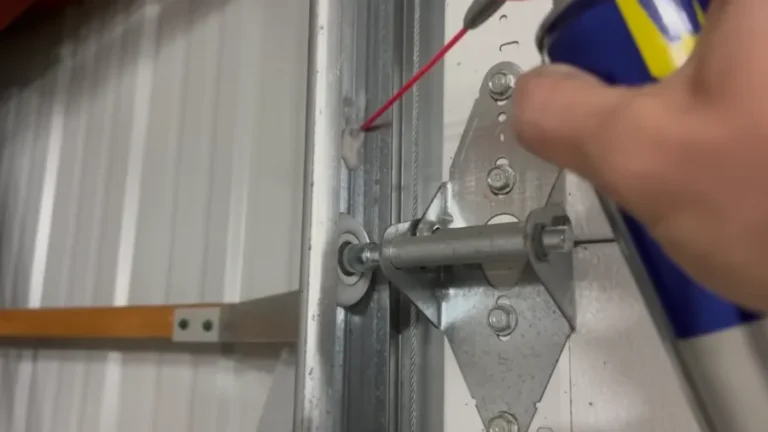
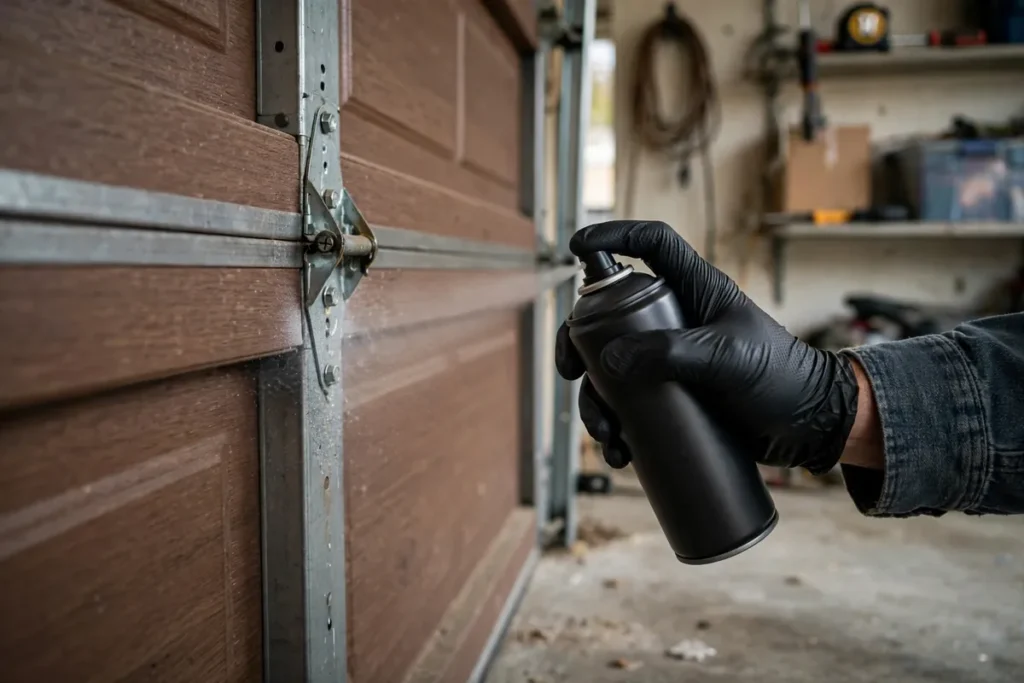
Lubricating a noisy garage door takes about fifteen minutes, and doing it the right way matters more than doing it often. Close the door, unplug the opener so it cannot start while your hands are near moving parts, and gather a rag, a step ladder, and a can of silicone or white lithium garage door lubricant. Work from the top down, and wipe each part clean before you spray, because spraying over grit just grinds it into the bearing. Keep your fingers away from the joints between door sections, and never spray into the inside of the tracks.
- Hinges: Spray each hinge pivot where the leaves meet, then run the door once to work it in.
- Steel roller bearings: Spray the bearing in the centre of each steel roller wheel, not the wheel surface itself.
- Nylon rollers: Skip the wheel on sealed-bearing nylon rollers, and spray only the stem bearing if your model allows it.
- Springs: Lightly coat the torsion spring coils above the door, then wipe off what drips.
- Bearing plates: Spray the bearing plates at each end of the spring bar.
- Chain or belt drive: Lubricate the drive gear as your opener manual directs, and do not grease a belt.
- Tracks: Do not lubricate the inside of the tracks at all, and wipe them clean with a damp cloth instead.
Plug the opener back in and run the door through two full cycles, listening as you go, because most squeaks fade by the second cycle once the lubricant has spread. Repeat this routine every six months, and before winter in Hamilton, rather than waiting for the noise to return. If a squeak survives two rounds of proper lubrication, the part is likely worn, not dry, and a technician should check the rollers, hinges, or bearings before the wear spreads to the track.
Quiet Upgrades That Make a Noisy Garage Door Quieter
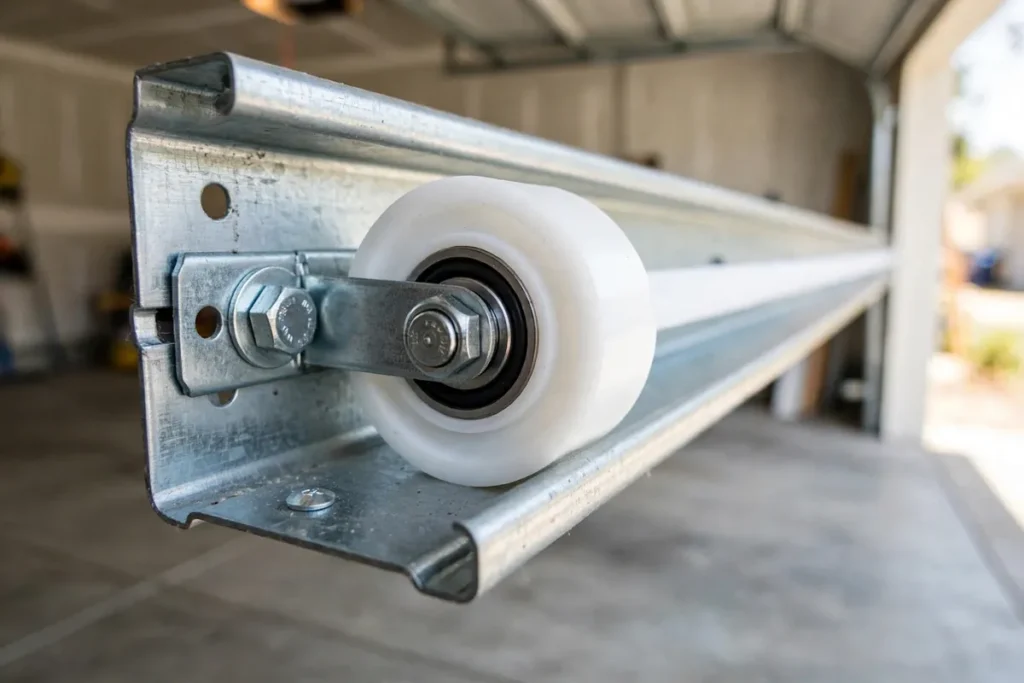
When lubrication and tightening are not enough, three upgrades make the biggest difference to a noisy garage door, and they are worth pricing before replacing the whole door. Sealed-bearing nylon rollers are usually the single biggest improvement, because steel rollers clank in steel tracks, while nylon rollers run far more quietly and do not need their wheels lubricated. A belt-drive opener is dramatically quieter than a chain drive, and a wall-mounted jackshaft opener is quieter still, because the motor is not hanging from the ceiling joists above a bedroom. Insulated panels also help, because they add mass and stiffness that dampen vibration and reduce temperature-related popping.
A balanced door matters as much as any upgrade, because an unbalanced door makes the opener strain and grind no matter how quiet the drive is. Before spending on an opener, have the balance, rollers, and tracks checked, because a new opener on a worn door will still sound worn. The table below compares the upgrades by what they fix, what they cost in Hamilton terms, and what to watch out for, so you can ask for a price with a clear picture. Prices are this site’s typical Hamilton repair range, not a quote for your door, and a final price should be confirmed before work starts.
| Upgrade | What it quiets | Typical Hamilton cost | Watch out for |
|---|---|---|---|
| Nylon rollers | Clanking, grinding, rhythmic thumping | Within $120-$450 | Needs a technician if rollers are seized or the track is bent |
| Belt-drive opener | Chain slap, motor rumble, vibration | $300-$600 for the unit, plus fitting | Check ceiling clearance and opener horsepower for your door weight |
| Wall-mount opener | Ceiling vibration, motor rumble | Higher than belt drive, plus fitting | Needs enough side room and a compatible door |
| Insulated panels | Popping, vibration, cold-weather noise | Part of a new door price | Only makes sense if panels are also damaged or uninsulated |
| Professional tune-up | Squeaking, rattling, light grinding | Within $120-$450 | Ask what the tune-up includes before booking |
Quiet upgrades for a noisy garage door: rollers, opener, and panels compared.
What Does It Cost to Fix a Noisy Garage Door in Hamilton, OH?
A noisy garage door that only needs lubrication and tightening costs almost nothing to fix yourself, because the lubricant and a socket wrench are the only tools involved. The cost starts when a part is worn, bent, or broken, and the ranges below are this site’s overall Hamilton repair range, not a quote for your door. A final price should be confirmed before work starts, especially if a spring, cable, track, or opener part needs replacing. Catching a squeak early is almost always cheaper than waiting, because a squeak that costs nothing to fix can become a worn roller, which becomes a bent track, which becomes a door off its runners.
| Job | Typical Hamilton cost | Notes |
|---|---|---|
| Lubrication and tightening, DIY | $0-$20 | One can of garage door lubricant and a socket wrench |
| Professional tune-up | Within $120-$450 | Lubrication, tightening, balance check, safety tests |
| Roller replacement | Within $120-$450 | Nylon rollers are quieter and longer lasting than steel |
| Off-track repair | $150-$350 | Door jammed or crooked after a track problem |
| Spring repair | Within $120-$450 | Never a DIY job, price confirmed before work |
| Opener repair or replacement | $100-$600 | Gear, board, or limit problem versus a new unit |
| Most Hamilton repairs overall | $120-$450 | Typical range, same-day in many cases |
Costs to fix a noisy garage door: the manual tune-up itself is cheap, repairs are not.
When to Call a Pro for a Noisy Garage Door in Hamilton, OH
Call a technician if the noise arrived suddenly rather than gradually, if the door moves unevenly or jerks as it travels, if you can see a gap in the spring above the door, or if a cable looks slack or frayed. The same rule applies if grinding continues after cleaning and lubrication, if a roller has popped out of the track, if the door will not stay where you put it in the balance test, or if the opener hums or strains without lifting the door. Repeated attempts to run a damaged door can bend a panel, pull a track bracket loose, or burn out the opener motor, and those repairs cost far more than the original fault.
The United States Consumer Product Safety Commission warns about injuries from garage doors and their parts, and spring and cable work is not a do-it-yourself job. See United States Consumer Product Safety Commission for garage door safety information.
Service covers Hamilton ZIPs 45011-45015, plus Fairfield, West Chester, Liberty Township, Fairfield Township, Middletown, Ross, Trenton, and Oxford. For a noisy garage door that you cannot quiet safely, or a door that has suddenly become loud, heavy, or uneven, call (513) 286-7477 and ask for the price before work, or see our 24/7 emergency repair page, our garage door opener repair page, our garage door spring repair page, our off-track repair page, our garage door repair cost guide for Hamilton, OH, and our garage door keypad not working guide.
How to Keep a Noisy Garage Door Quiet All Year in Hamilton, OH
A door that stays quiet is simply a door that is looked after, and a looked-after door is far easier to keep quiet than a neglected one is to silence. Run the monthly safety checks the United States Consumer Product Safety Commission recommends: test the auto-reverse with a flat board on the ground, check that the photo-eye sensors face each other and are clean, and check the balance by disconnecting the opener and lifting the door halfway. Clean the tracks, wipe salt film off panels and hardware in winter, and lubricate rollers, hinges, and springs every six months, before winter and again in spring. Tighten visible hardware once a year, firm but not over-tight, and leave springs, cables, and bottom brackets alone.
Noisy Garage Door in Hamilton, OH Right Now?
Do not force a grinding, banging, or suddenly loud door, and do not touch a spring, cable, or bottom bracket. Tell us what sound the door makes and when it happens, and we will connect you with a local technician.
Frequently Asked Questions
Why is my garage door so noisy all of a sudden?
A garage door that suddenly becomes noisy usually has a broken part, not normal wear, because wear grows gradually over months. Check for a gap in the spring, a cracked hinge, a roller out of the track, or a slack cable, and stop using the door if you find any of these. If nothing looks broken, check for loose hardware and dry hinges, then call a technician.
What is the best lubricant for a noisy garage door?
The best lubricant for a noisy garage door is a silicone spray or a white lithium grease spray made for garage doors. Avoid a penetrating oil as a lubricant, because it dries out fast and leaves parts drier than before, and avoid heavy grease, which attracts dirt and grit. Apply it to hinge pivots, steel roller bearings, spring coils, and bearing plates, never to the inside of the tracks.
Should I grease my garage door tracks to stop the noise?
No, you should not grease the inside of your garage door tracks, because grease there collects dirt and makes rollers slide instead of roll. That sliding adds friction and noise, and it can wear the track faster over time. Keep tracks clean with a damp cloth, dry them well, and lubricate only the parts that turn, such as hinges, roller bearings, and springs.
Why does my noisy garage door squeak more in winter?
A noisy garage door squeaks more in winter because cold thickens lubricant, contracts metal, and lets road salt and grit build up in tracks and on hinges. The door has to work harder to bend around the track, and dry parts rub more loudly when the temperature drops. Lubricating before the first hard freeze, and again in late winter, usually keeps winter squeaking under control.
What does grinding mean on a noisy garage door?
Grinding on a noisy garage door usually means worn roller bearings, a roller that has stopped rolling and started sliding, a bent or misaligned track, or debris caught in the track. It is more serious than squeaking, because metal is wearing against metal with every cycle. Clear loose debris, then stop running the door and call a technician if the grinding continues or the track looks bent.
Can I fix a rattling noisy garage door myself?
Yes, rattling is the safest noisy garage door problem to fix yourself, because it is usually loose hardware. With the door closed and the opener unplugged, snug hinge bolts, track brackets, and opener fixings with a socket wrench, firm but not over-tight. Do not touch the bottom brackets at the bottom corners of the door, because those are attached to lift cables under spring tension.
Is a loud bang from my garage door an emergency?
Yes, a single loud bang from a garage door is an emergency, because it usually means a spring has just broken under tension. The door will suddenly feel very heavy, it may only open a few inches, and you may see a gap in the spring coil. Do not use the door manually or with the opener, clear the opening, and call a technician at once for a safe repair.
Are nylon rollers worth it for a noisy garage door?
Yes, sealed-bearing nylon rollers are usually worth it for a noisy garage door, because steel rollers clank in steel tracks while nylon rollers run far more quietly. They are also one of the cheapest quiet upgrades, and they last longer because the sealed bearing keeps dirt out. Have a technician fit them if rollers are seized, the track is bent, or the door is heavy or unbalanced.
Why is my garage door opener so loud even when the door moves well?
A loud garage door opener on a door that moves well usually points to the drive, such as a loose chain, a stripping drive gear, or a chain drive that is simply loud by design. A belt drive is quieter than a chain drive, and a wall-mounted opener is quieter still, because it does not hang from ceiling joists. Have it checked if grinding comes from inside the motor housing.
How often should I maintain a noisy garage door to keep it quiet?
Maintain a noisy garage door every six months to keep it quiet, with a deeper check once a year, and an extra lubrication before winter in Hamilton. Each visit should include cleaning the tracks, lubricating hinges, rollers, and springs, tightening visible hardware, and testing the balance and auto-reverse. Monthly safety checks, such as the reversal test and sensor check, catch problems before they turn into noise or failure.
Conclusion: Listen to Your Noisy Garage Door Before It Becomes a Repair
A noisy garage door in Hamilton, OH is giving you useful information, and the cheapest time to act on it is the first week you hear it. Squeaking usually needs only lubricant, rattling usually needs only a wrench, and both take less than half an hour once you know where to look. Grinding, popping, banging, and uneven movement are different, because they point to worn rollers, a bent track, a cracked hinge, or a broken spring, and running the door anyway only adds to the repair bill. Learn the sounds in this guide, do the safe checks twice a year, and leave springs, cables, and bottom brackets to a technician.
If your noisy garage door will not quiet down after cleaning, tightening, and lubrication, or if it suddenly sounds very different, feels heavy, or moves unevenly, do not force it. Call (513) 286-7477, tell us what sound the door makes and when it happens, and get connected with a local technician who can diagnose it and confirm the price before work starts.