Garage Door Opener Slow or Humming in the Cold? Here’s Why
Every January in Butler County, the same service calls roll in: “My garage door opener worked fine in October, but now it hums, crawls, or gives up halfway.” If your LiftMaster, Chamberlain, or Genie opener is struggling on sub-freezing Hamilton mornings, the cold is almost certainly exposing a problem — not creating one out of thin air. Here’s what’s actually happening, what you can fix yourself, and when to Call (513) 286-7477 before a straining opener burns itself out.
Why Cold Makes a Garage Door Opener Struggle: The Physics
Your garage door opener is a small motor asked to move 100–400 lbs of door. In warm weather it does this easily because the springs carry nearly all the weight. Cold attacks that balance from four directions at once:
- Lubricant thickens. Old petroleum-based grease turns to sludge below freezing, and the rollers, hinges, and springs drag instead of gliding.
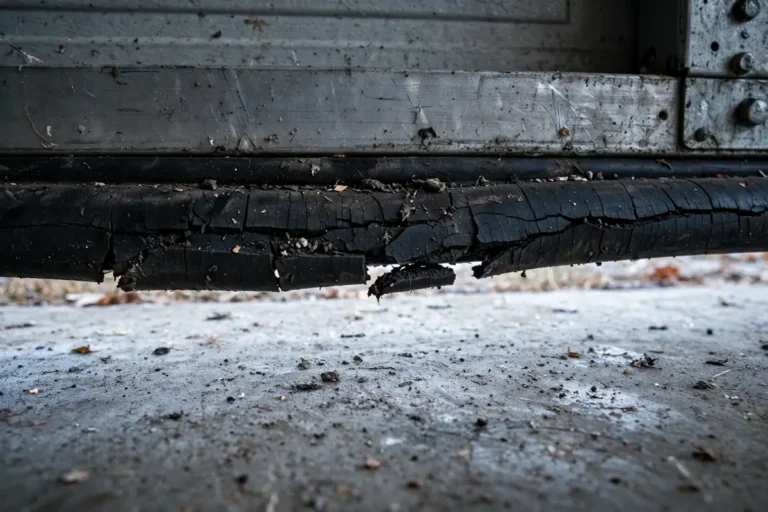
- Rubber stiffens. The bottom seal and weatherstripping go rigid, adding friction along the full width of the door.
- Metal contracts. Tracks, rollers, and springs all shrink slightly — enough to tighten clearances and increase resistance.
- Springs get brittle. Cold steel fatigues faster, and a spring that was marginal in fall can lose effective lift in January — leaving the opener to muscle dead weight.
The result: the garage door opener hits its force limit and either hums without moving (motor stalled against resistance), moves slowly, or reverses mid-travel (the safety system interpreting drag as an obstruction).
Fixes You Can Do Yourself Today
1. Lubricate with the right product
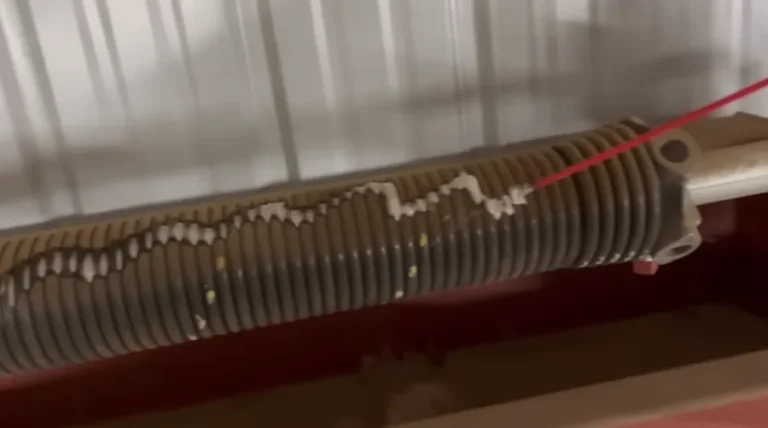
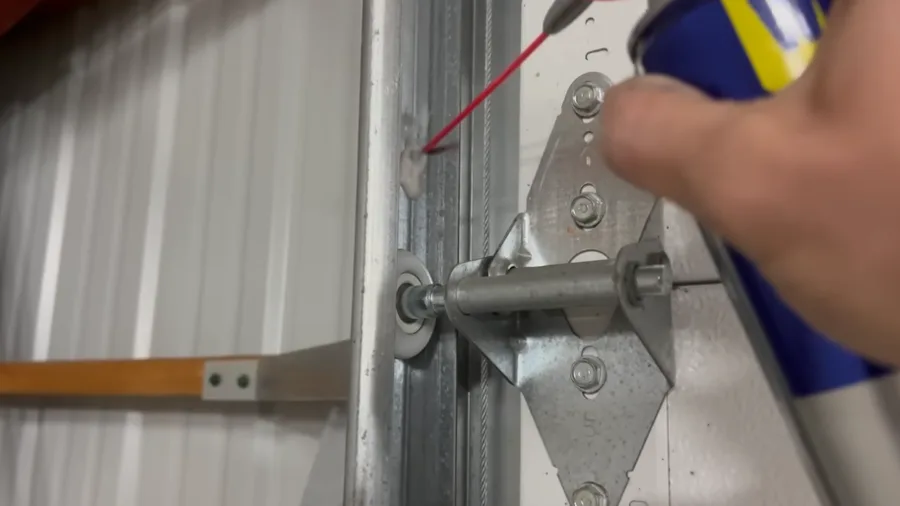
This fixes more “slow in winter” complaints than anything else. Use a silicone-based garage door lubricant (spray) on rollers, hinges, and springs — silicone stays fluid in cold weather. What NOT to use: WD-40 (it’s a solvent, not a lubricant, and it strips existing grease) and old petroleum grease (it hardens in the cold — it may be the cause of your problem). Wipe the tracks clean with a rag instead of lubricating them; grease in the tracks collects grit.
2. Replace batteries before they die
Cold drains batteries fast. Swap the remote batteries (usually CR2032 coin cells) and the keypad 9V every fall — use lithium 9Vs, which hold up below freezing while alkaline dies. If your opener has battery backup (standard on newer LiftMaster/Chamberlain units), test it annually; a dead backup battery means no door during the next Ohio ice-storm outage.
3. Check for LED bulb interference
Here’s a sneaky one: cheap LED bulbs screwed into the garage door opener emit radio-frequency interference in the 300–390 MHz range — right where your remote talks to the opener. The classic symptom is a remote that only works when you’re right next to the garage but worked from the street last year (when the old incandescent was still in there). Swap in garage-door-rated LED bulbs and the range comes back.
4. Straighten the antenna
The garage door opener’s antenna wire should hang straight down, clear of any metal. If it’s coiled up, tucked against the motor housing, or touching the track, remote range collapses. Thirty seconds with no tools.
What NOT to Do: Cranking the Force Settings
When the door drags, the tempting fix is turning up the garage door opener’s force adjustment so it “powers through.” Don’t. The force setting exists to make the safety reversal work — it’s what stops the door from crushing a child, pet, or car bumper. Cranking it to overcome winter drag defeats that protection and masks the real problem (dry rollers, a dying spring) until something expensive breaks.
The correct approach is always the reverse: fix the drag (lubrication, springs, alignment), then verify the force is set to the minimum that moves the door reliably. If you don’t know where the force adjustment is on your unit, that’s a sign to have a technician handle it.
When Cold Symptoms Mean a Bigger Problem
Sometimes the garage door opener is the messenger, not the problem. Call for service if:
- The door feels noticeably heavier when lifted by hand (disconnect the opener first to test) — a weakening spring is the #1 thing cold weather exposes.
- The opener strains even after lubrication — the motor is compensating for mechanical resistance it wasn’t designed to carry.
- You hear grinding or popping from the spring area — that’s a spring telling you its remaining cycles are numbered.
- The door reverses on a clear track repeatedly — could be force settings, misaligned sensors, or a bent track section.
A straining garage door opener is often the early warning before a spring snaps on the coldest morning of the year. A winter tune-up — lubrication, balance test, spring and cable inspection — costs far less than an emergency spring replacement at 6 AM in January. If the motor or gears are failing, see garage door opener repair in Hamilton. If the door feels heavy by hand, it’s a job for spring repair.
LiftMaster vs. Chamberlain vs. Genie in Cold Climates
Homeowners ask us this every winter. The short version: LiftMaster and Chamberlain are made by the same parent company (Chamberlain Group) — LiftMaster is the pro-installed line, Chamberlain the retail/DIY line, with broadly similar cold-weather reliability. Genie competes on price and is fine for light-duty use, but has a weaker reputation for parts availability and support when something fails mid-winter.
More important than brand in cold climates: adequate horsepower (3/4 HP for heavy insulated or double doors — an underpowered opener dies young in Ohio), battery backup (worth every penny during ice-storm outages), and wall-mount (jackshaft) openers if you want the quietest option — they mount beside the door, free up ceiling space, and run noticeably quieter than chain drives.
Other Garage Door Repair Services in Hamilton
🔩 Garage Door Spring Repair
the hidden cause behind most “opener struggling” calls
⚙️ Garage Door Opener Repair
gear, motor, and logic board repairs
👁️ Garage Door Sensor Repair
when the door reverses on a clear track
🚨 Emergency Garage Door Repair
24/7 winter breakdown service
📞 Contact Us
schedule a winter tune-up
Frequently Asked Questions
My garage door opener hums but the door barely moves below freezing — why?
Cold thickens old lubricant, stiffens the rubber seals, and makes springs brittle — all of which raise resistance until the motor stalls against it. Start with silicone-based lubrication on rollers, hinges, and springs. If the door also feels heavy by hand, the spring is likely weakening and needs professional attention.
The garage door opener works in the morning but fails at night — is it the cold?
Very likely. Nighttime is when temperatures bottom out and lubricant is thickest. This day/night pattern is the signature of cold-exposed mechanical drag (or a marginal spring) rather than an electrical fault, which would usually fail consistently.
Should I adjust the force settings for winter?
No — increasing force to overcome winter drag defeats the safety reversal system that’s designed to stop the door on contact. Fix the underlying drag (lubrication, spring condition, alignment) and keep force at the minimum that moves the door reliably.
My remote barely works in winter but the wall button does — battery or something else?
Check both: cold drains remote batteries fast (replace the CR2032 annually), but the other classic cause is LED bulb interference — cheap LEDs in the opener emit RF noise that kills remote range. Swap to garage-rated LEDs and replace the battery; that combination fixes the vast majority of cases.
Which garage door opener brand holds up best in cold climates?
LiftMaster (pro line) and Chamberlain (retail line, same parent company) dominate for reliability and parts availability. Genie is budget-friendly but weaker on support. More important than brand: 3/4 HP for heavy doors, battery backup for storm outages, and correct spring sizing so the opener isn’t doing the spring’s job.
Can cold weather permanently damage my garage door opener?
Running a straining garage door opener all winter accelerates wear on the motor and drive gear, and repeatedly stalling against resistance can strip the nylon gear or burn out the motor. Addressing the drag early (lubrication, spring check) prevents the opener from becoming the casualty.
Why does my door reverse by itself on cold mornings?
The safety system interprets cold-induced drag as an obstruction and reverses the door. Common contributors: stiff bottom seal dragging on the threshold, thickened lubricant, or a slightly misaligned track that only binds when metal contracts. Lubricate first, then check track alignment.
Is a wall-mount (jackshaft) opener better for winter?
It has real advantages: it mounts beside the door (no rail across a freezing ceiling), runs quieter, and frees overhead space. It’s pricier ($500–$800+ installed), but for low-headroom garages or noise-sensitive homes with bedrooms above, it’s worth considering when replacing.
How often should I lubricate in an Ohio winter?
Do a full silicone lubrication in late fall before the first hard freeze, then a quick touch-up mid-winter (January) on the rollers and hinges. If you hear new squeaking or the door slows, don’t wait for the schedule — lubricate then.
Don’t Let a $15 Tune-Up Become a $400 Repair
Most winter opener failures we see started as a dry roller or a tired spring in November. A seasonal tune-up — proper cold-weather lubrication, a balance test, and a spring and cable inspection — takes under an hour and heads off the 6 AM January emergency entirely.
📞 Call (513) 286-7477 to schedule a winter tune-up in Hamilton, OH, or request service online. 24/7 emergency service all winter long.