How Long Do Garage Door Springs Last in Ohio? The 10,000-Cycle Math
If one of your garage door springs snapped after just six years, you’re probably wondering whether that’s normal — or whether someone sold you a cheap part. Here’s the truth most homeowners in Hamilton never hear: garage door springs aren’t rated in years at all. They’re rated in cycles, and once you do the math, that “early” failure usually makes perfect sense. Call (513) 286-7477 if your door is already down — call for same-day spring replacement help in Hamilton, OH.
Garage Door Springs Are Rated in Cycles, Not Years
A “cycle” is one full open-and-close of your garage door. A standard torsion spring is rated for about 10,000 cycles. How long that lasts depends entirely on how often your household uses the door:
- 2 cycles per day (leave in the morning, home at night) → roughly 13–14 years
- 4 cycles per day (two drivers, kids coming and going) → roughly 6–7 years
- 6 cycles per day (garage as the front door, home business, teens with cars) → roughly 4–5 years
- 8+ cycles per day → as little as 3 years
So a spring that “only lasted six years” in a busy two-car household did exactly what it was engineered to do. The spring didn’t fail early — the household just cycles more than average. If you want a quick estimate, count your door’s daily trips for a week and divide 10,000 by that number, then divide by 365. That gives you a realistic lifespan in years.
Torsion vs Extension: Different Lifespans
Not all garage door springs are built the same. Torsion springs — the thick coils mounted on a shaft above the door — typically last 15,000 to 20,000 cycles in quality installations, which works out to about 8–12 years for an average household. Extension springs — the thinner springs stretched along the horizontal tracks on either side — are generally rated 10,000 to 15,000 cycles, or about 5–7 years.
Torsion springs cost more up front but last longer, run quieter, and are safer when they fail (they stay on the shaft instead of launching across the garage). If your door still has extension springs, converting to torsion during the next replacement is one of the best upgrades a Hamilton homeowner can make — especially on a double-wide door, where extension springs work hardest.
Why Ohio Winters Kill Garage Door Springs Early
Ask any garage door tech in Butler County when garage door springs break most, and you’ll get the same answer: the first hard cold snap of winter. There’s real physics behind it. Cold makes spring steel more brittle, so a coil that’s already fatigued from thousands of cycles finally gives up when the temperature drops. At the same time, the door itself is at its heaviest — lubricant thickens, rubber seals stiffen and stick, and any frost adds drag. The spring faces peak stress at the exact moment it’s weakest.
Then there’s road salt. Slush tracked into the garage coats the garage door springs in a salt film that accelerates rust, and rust pits are where fatigue cracks start. A spring that might have lasted 10,000 cycles in a dry climate can give up at 7,000–8,000 in Ohio. If your springs are more than five years old, that first week of sub-freezing mornings is when you should be listening for trouble — not ignoring it.
Are High-Cycle Springs Worth the Extra Money?
High-cycle springs — rated 25,000 to 50,000 cycles — typically add $100 to $200 to a replacement job. For a household running 6 cycles a day, the math is compelling: a standard 10,000-cycle spring lasts about 4.5 years, while a 25,000-cycle spring lasts over 11. That’s one service call instead of two or three over the same period, and you skip the emergency-scheduling scramble entirely.
They’re worth it if your household cycles heavily (kids, home business, garage-as-entrance), if your garage door springs keep dying young, or if you plan to stay in the home. They’re less critical for a retired couple doing 2 cycles a day — a standard spring will already last 13+ years there. When you get a quote, ask for the cycle rating in writing. A reputable tech will tell you exactly what you’re buying.
Warning Signs Your Garage Door Springs Are Wearing Out
Garage door springs rarely fail with zero warning. (For general garage door safety advice, see the U.S. Consumer Product Safety Commission.) Watch for these:
- A loud bang from the garage — the classic sound of a spring snapping, often mistaken for something falling
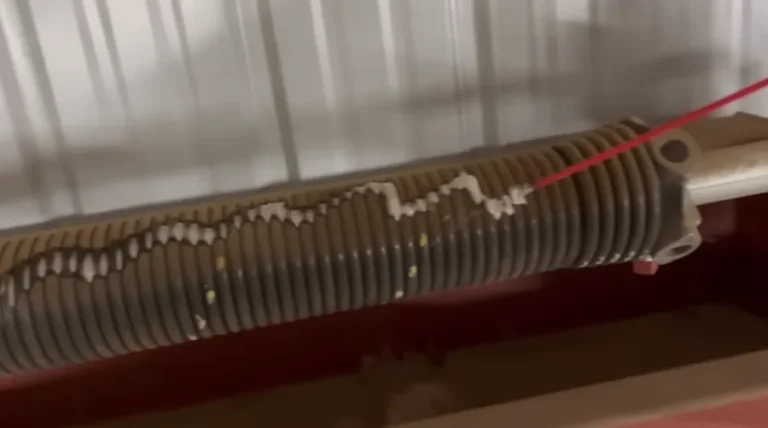
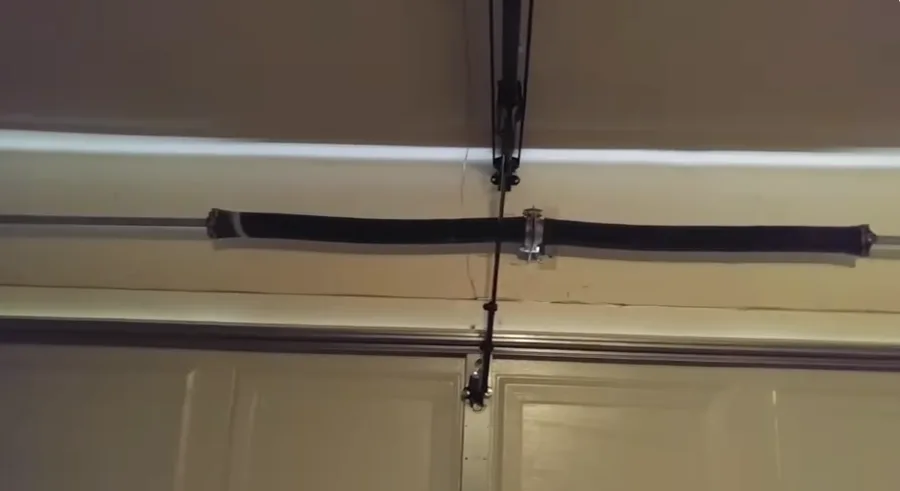
- A visible gap in the coil — look at the torsion spring above the door; a 2–4 inch gap between coils means it’s broken
- The door suddenly feels heavy — if manual lifting is a struggle, the springs aren’t counterbalancing anymore
- The opener strains, slows, or reverses — it’s lifting dead weight it wasn’t designed for
- The door won’t stay halfway open — a balanced door holds position; one that slams down has weak springs
If you spot any of these, stop using the door and call a professional. Running the opener against a dying spring burns out motors and strips gears — turning a $200 spring job into a $500 opener replacement.
Why You Should Always Replace Both Springs
On a two-spring system, both garage door springs were installed on the same day and have cycled the same number of times. When one breaks, the other is living on borrowed time — often weeks, not months. Replacing both at once costs only marginally more in parts (the labor is nearly identical), and it means you won’t be paying for a second emergency visit when the twin fails. Any tech who suggests replacing just one on an older system isn’t doing you a favor. If yours are due, see how garage door spring repair works in Hamilton and what it typically costs.
Other Garage Door Repair Services in Hamilton
🔩 Garage Door Spring Repair in Hamilton OH
same-day torsion & extension spring replacement
🚨 24/7 Emergency Garage Door Repair
spring snapped at 6 AM? We’re on it
💲 Garage Door Repair Cost Guide
what spring jobs actually cost locally
❓ Garage Door Repair FAQ
more common garage door questions answered
Frequently Asked Questions
How many years do garage door springs typically last?
It depends on use, not the calendar. A standard 10,000-cycle spring lasts about 13–14 years at 2 cycles per day, 6–7 years at 4 cycles per day, and 4–5 years at 6 cycles per day. Torsion springs generally outlast extension springs by several years.
Why did my spring break after only 6 years — is that normal?
Very likely, yes. Six years at 4–5 cycles per day is roughly 9,000–11,000 cycles — right at a standard spring’s rated life. Busy households with kids, teens, or a home business cycle far more than they realize.
Why do garage door springs always seem to break in winter?
Cold makes spring steel brittle while simultaneously making the door heavier — lubricant thickens, seals stiffen, and frost adds drag. The spring faces maximum stress when it’s most vulnerable, so fatigued springs let go on the coldest mornings.
Are high-cycle springs worth the extra money?
For busy households, yes. A 25,000-cycle spring costs roughly $100–$200 more but can last 2–3 times longer, which means fewer service calls and a lower cost per year. For light-use households, standard springs already last 13+ years.
How do I figure out how many times a day my door cycles?
Count every open-and-close as one cycle. Track it for a typical week — include kids, dog walkers, deliveries, and anyone using the garage as the main entrance — then divide by 7 for your daily average.
Should I replace both garage door springs if only one broke?
Yes. Both springs are the same age with the same cycle count, so the survivor is nearly as fatigued as the one that broke. Replacing both costs little extra in parts and saves you a second emergency visit weeks later.
Do torsion springs or extension springs last longer?
Torsion springs typically last 15,000–20,000 cycles (8–12 years), while extension springs last 10,000–15,000 cycles (5–7 years). Torsion springs are also safer when they fail since they stay contained on the shaft.
Can I tell my garage door springs are wearing out before they break?
Sometimes. A door that feels heavy by hand, an opener that strains or slows, a door that won’t stay halfway open, or visible rust and stretched coils are all warning signs. But many springs fail with no visible warning — which is why cycle math matters more than inspection.
Will my opener still work if a spring breaks?
It may try, but don’t let it. Running an opener against a broken spring forces it to lift 100–400 pounds of dead weight, which burns out motors and strips gears. Disconnect the opener and call a pro instead.
Need Help in Hamilton, OH?
If your spring is making noise, your door feels heavy, or you’ve heard that telltale bang, don’t wait for the second spring to go. A good technician replaces both springs in a single visit, balances the door, and checks your cables and opener while there. 📞 Call (513) 286-7477 for same-day spring service anywhere in Hamilton, OH — or request service online.
Similar Posts
Is a Broken Garage Door Spring Dangerous? Safety Rules
You heard a bang like a gunshot from the garage at 6 AM, and now the door won’t budge. Your first question — is this actually dangerous, or just inconvenient? — is the right one to ask, because a broken garage door spring is the single most dangerous common garage door failure. Here’s how to…
Broken Garage Door Cable Repair in Hamilton, OH
If your garage door is suddenly hanging crooked — one side higher than the other — or you spot a loose garage door cable dangling by the bottom corner, you’ve likely got a broken garage door cable. This is one of the few garage door failures where the door can genuinely drop without warning. Here’s…
Garage Door Opener Slow or Humming in the Cold? Here’s Why
Every January in Butler County, the same service calls roll in: “My garage door opener worked fine in October, but now it hums, crawls, or gives up halfway.” If your LiftMaster, Chamberlain, or Genie opener is struggling on sub-freezing Hamilton mornings, the cold is almost certainly exposing a problem — not creating one out of…
Repair or Replace Your Garage Door? The 50% Rule Explained
Here’s a repair or replace scenario we see constantly in Hamilton: a homeowner has spent $600 over two years patching a 16-year-old builder-grade door — a spring here, rollers there, now the opener is straining. Each repair made sense on its own. Together, they’re money thrown at a door that’s done. If you’re wondering whether…
Garage Door Won’t Close in Hamilton, OH? 7 Checks Before You Call
Garage Door Won’t Close in Hamilton, OH? 7 Checks Before You Call If your garage door won’t close, the first thing to know is this: in most cases, the door is not broken. It is protecting you. A garage door won’t close when its safety sensors, limits, or tracks tell the opener that something is…
Garage Door Maintenance in Hamilton, OH: Monthly, Twice-Yearly and Annual Checklist
Garage Door Maintenance in Hamilton, OH: Monthly, Twice-Yearly and Annual Checklist Your garage door is the largest moving object in your home, and in Hamilton, OH it works hard all year. It opens and closes about four times a day in a typical home, which adds up to roughly 1,500 cycles a year, and every…