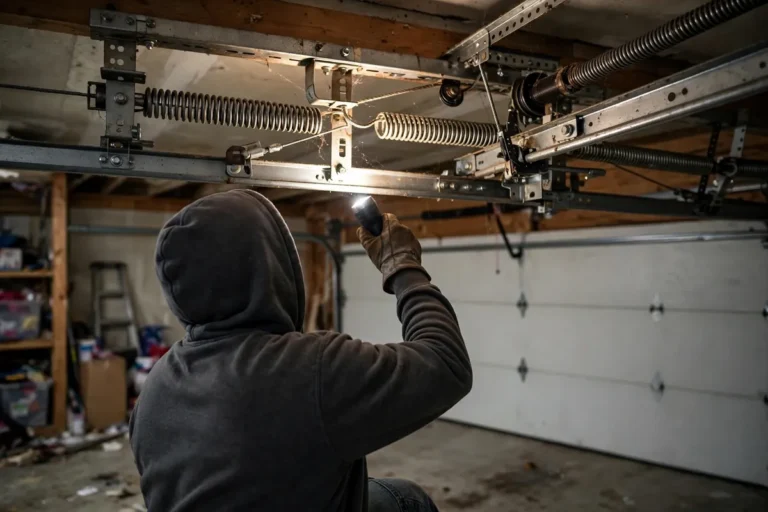
Garage Door Won’t Close in Hamilton, OH? 7 Checks Before You Call
Garage Door Won’t Close in Hamilton, OH? 7 Checks Before You Call
If your garage door won’t close, the first thing to know is this: in most cases, the door is not broken. It is protecting you. A garage door won’t close when its safety sensors, limits, or tracks tell the opener that something is wrong, and the opener reverses or stops instead of forcing the door down. That feels annoying at 7 a.m., but it is the same system that stops a heavy door from closing on a child, a pet, or a car bumper.
This guide walks you through the safe checks in the right order, from the 2-minute sensor wipe to the point where you should stop and call a technician in Hamilton, OH. You will learn how to tell a sensor problem from a track problem, what a blinking opener light means, and when a garage door won’t close because a spring or cable has failed. No tools are needed for the first checks, and nothing here asks you to touch a spring, a cable, or a bottom bracket.
If your door is stuck open overnight, your car is trapped, or the door is crooked, skip the checks and call (513) 286-7477. The 24/7 call line connects you with a local garage door company in Hamilton and Butler County, and you can ask for the price before any work starts. For everyone else, start with the quick answer below, then work through the 7 checks.
Key Takeaways: Garage Door Won’t Close
- A garage door won’t close most often because the safety sensors are blocked, dirty, or misaligned, not because the opener has died.
- Check the sensor lights first: both should be solid, not blinking, when the path is clear.
- Do not keep forcing the door, and do not touch springs, cables, or bottom brackets.
- If the door is crooked, jammed, or stuck open, call (513) 286-7477 for 24/7 help in Hamilton, OH.
Quick Answer: Why a Garage Door Won’t Close
A garage door won’t close when the opener’s safety system stops it on purpose. The most common cause is a blocked or misaligned photo-eye sensor near the floor, followed by a close-limit or close-force setting that needs adjusting, and then by a track, roller, or obstruction problem. Check the sensor path, wipe both lenses, and confirm both sensor lights are solid. If both lights are solid and the door still reverses, the problem is usually in the limits, force, tracks, or opener itself, and a technician should check it.
What Does “Garage Door Won’t Close” Actually Mean?
A garage door won’t close is a simple description for several different failures. Sometimes the door does not move down at all. Sometimes it starts down, travels a few inches, and then goes back up. Sometimes it closes, hits the floor, and immediately opens again. Each pattern points to a different cause, so notice exactly what your door does before you change anything.
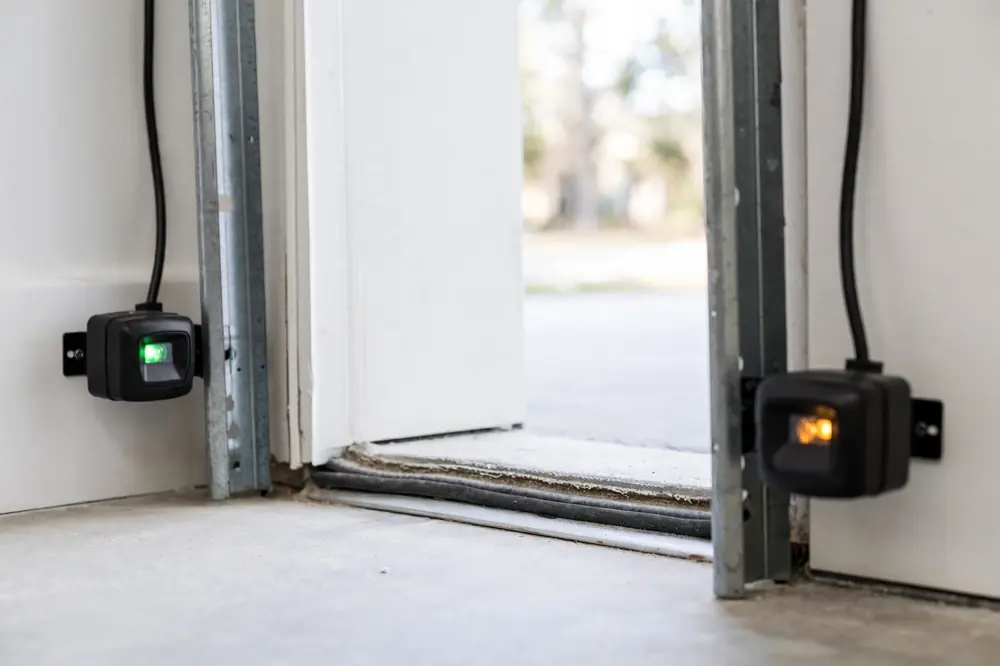
The pattern, plus the sensor lights and any blinking opener light, is also the most useful information you can give a technician on the phone. The safety sensors are two small boxes near the floor, one on each side of the door opening, about 6 inches off the ground. One sends an invisible beam across the opening, and the other receives it. Since 1993, openers sold in the United States have been required to have this system. If the beam is broken while the door is closing, the opener reverses or refuses to close.
Check 1: Are the Safety Sensors Blocked or Misaligned?
This is the first check because it fixes most cases, and it takes about 5 minutes. Start by looking at the floor between the two sensors. Move bins, bikes, hoses, toys, leaves, and cobwebs out of the beam path. Then wipe both sensor lenses with a soft, dry cloth, because dust and spider webs are a common cause, especially in spring and fall in Hamilton. Next, look at the small lights on each sensor. On most brands, one light stays steady, and the other should also be steady when the beam is connected. A blinking, dim, or dark receiving light means the beam is broken or the sensors are out of alignment.
If one light is blinking, loosen the wing nut or bracket screw on that sensor just enough to move it by hand. Slowly angle it up, down, and side to side while you watch the light. When the light turns solid and stops flickering, hold the sensor steady and tighten the nut again. Then try the door once. If it closes fully, you have found the problem. If the lights are solid but a garage door won’t close, move to the next checks, because the fault is probably not the sensor alignment itself. For a full sensor service, see our garage door sensor repair in Hamilton, OH page.
Why Does My Garage Door Reverse Before It Closes?
A door that reverses on the way down is almost always a safety response, not a random fault. The opener may sense a blocked sensor beam, a physical obstruction it cannot see, or resistance in the tracks that feels like an object in the way. Watch for the pattern: a door that reverses immediately, with the opener light blinking, usually points to the sensors. A door that travels partway, then reverses, more often points to binding in the track, a bent section, or a close-force setting that is too sensitive.
A door that only closes while you press and hold the wall button is a strong clue that the sensor circuit is the problem, because holding the button overrides the sensors on most openers. Do not use the hold-the-button trick as a long-term fix. Use it only once, while the path is visibly clear, if you must close the door for the night, and then get the sensors fixed. A garage door won’t close safely if its safety system is bypassed every day, and a child or pet could be in the path next time.
Check 2: Close Limit and Close Force Settings
The close limit tells the opener how far down to travel. The close force tells it how much resistance should trigger a reversal. If the limit is set too short, the door stops before it reaches the floor and then reverses. If the force is set too sensitive, normal friction from a cold morning, a stiff seal, or a dirty track can make the opener think it hit something. These controls are usually on the opener motor unit, often labelled as limit and force screws or dials, and your opener manual shows their exact location for your brand.
Adjust only in small steps, and test after each step. Turn the close limit slightly in the direction that lets the door travel further, or turn the close force slightly clockwise to increase force, if the manual says so for your model. Never turn force all the way up. The door must still reverse when it contacts a real obstacle, and that test matters more than a door that simply closes. If you are unsure which control is which, or the door still will not close after a small adjustment, leave the settings alone and call a technician.
Check 3: Tracks, Rollers, and Things in the Way
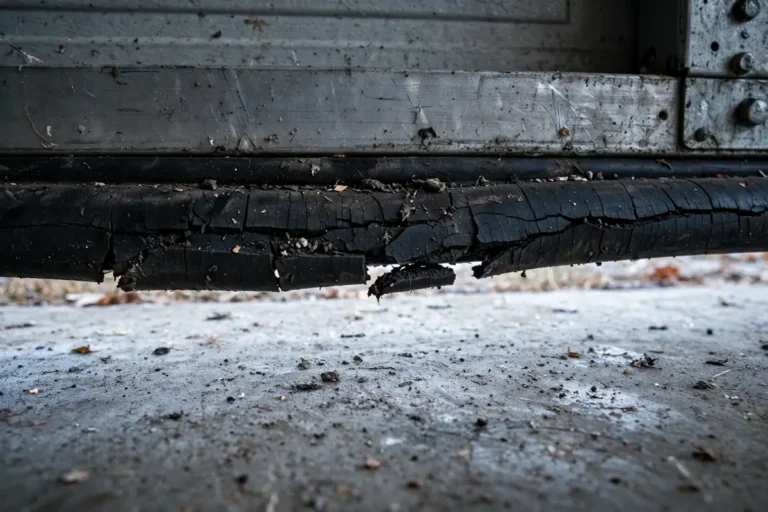
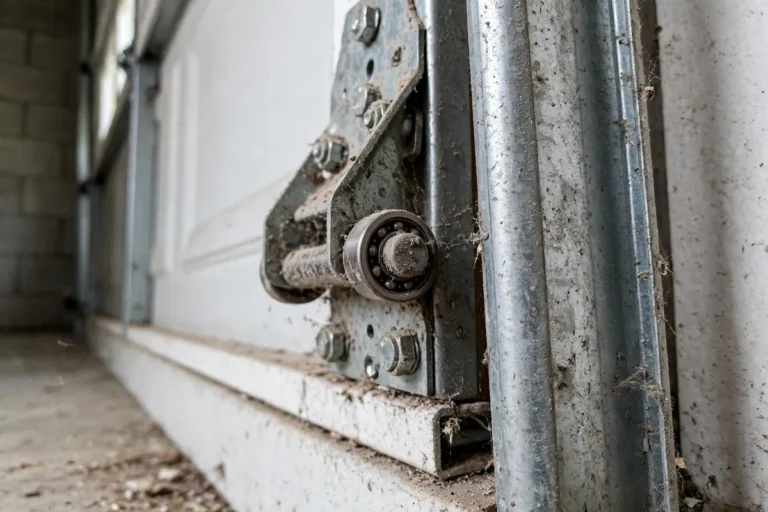
A garage door won’t close smoothly if the rollers cannot roll. Look, without touching the springs or cables, for debris in the tracks, a bent track section, a roller that has popped out, or ice and slush frozen to the bottom seal on a Hamilton winter morning. In fall, leaves and small stones collect at the threshold. In winter, the bottom seal can freeze to the concrete overnight, and forcing the opener against that ice can strip gears or tear the seal. Clear the threshold, sweep the track area, and check that nothing is hanging into the door path from above.
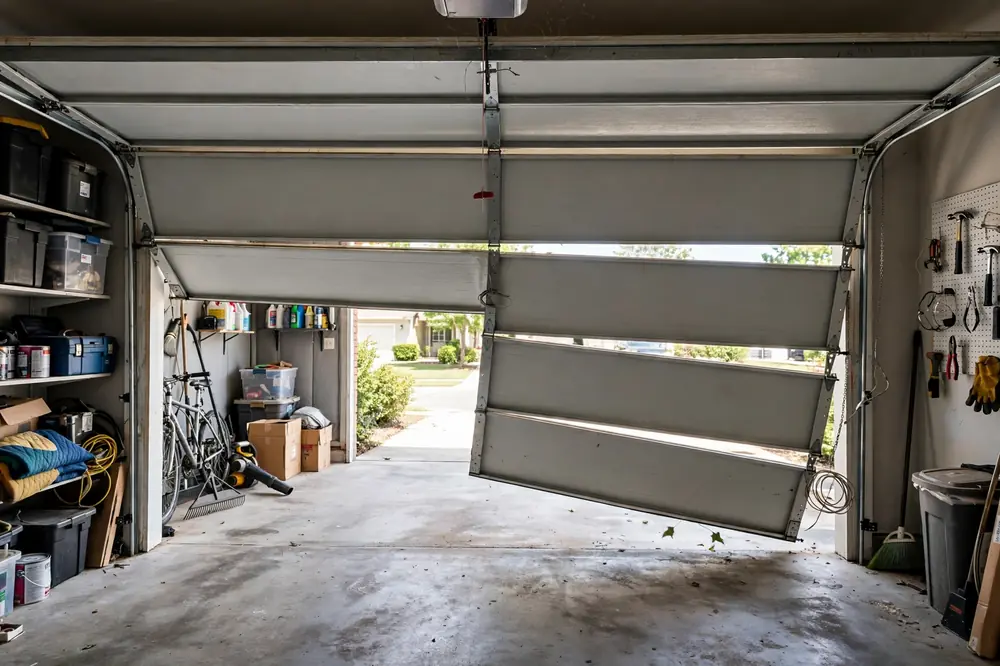
If the door is crooked, jammed halfway, or a roller is clearly out of the track, stop. That is not a sensor problem, and it is not a setting problem. A crooked door can drop or twist further if you keep running the opener. See our off-track repair in Hamilton, OH page, keep everyone clear of the door, and call (513) 286-7477. The same stop rule applies if you see a broken spring, a frayed or dangling cable, or a gap in the spring above the door.
Check 4: Power, Remote, Wall Button, and Lock Mode
Sometimes a garage door won’t close because of a simple control problem, not a mechanical one. Check the GFCI outlet and the garage breaker first, especially after a summer thunderstorm in Butler County. Then replace the remote and keypad batteries, because a weak signal can behave like a dead opener. Next, check the wall control: make sure the lock or vacation button is off, and that the manual lock handle on the door itself is open. A locked door will not close from the remote, and it will look like a much bigger fault than it is.
Try the wall button, then the remote, and note which one works. If the wall button works but the remote does not, the problem is in the remote, its batteries, or the opener’s receiver. If neither works and the opener light is off, the problem is power. If neither works and the light blinks, count the blinks if you can, because many openers use blink codes to flag a sensor fault. That detail helps a technician bring the right part on the first visit.
Check 5: When a Spring, Cable, or Off-Track Problem Stops the Door
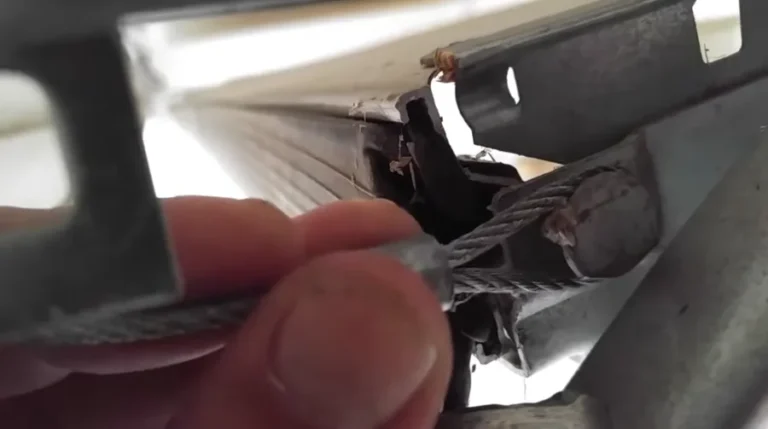
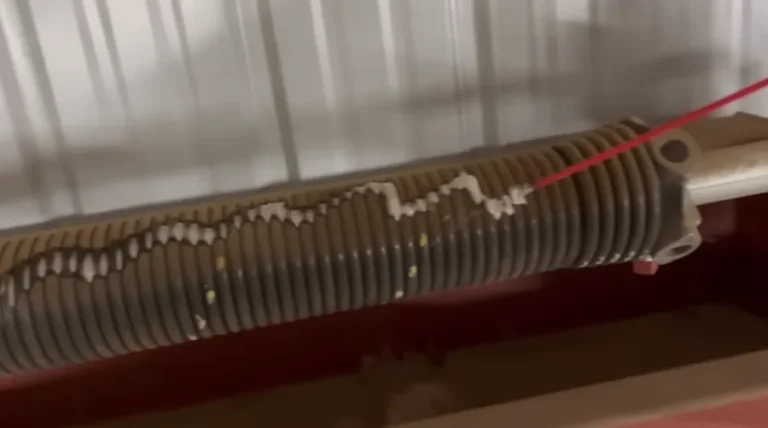
A garage door won’t close safely when its counterbalance system has failed. A broken torsion spring usually announces itself with a loud bang, after which the door becomes very heavy. A broken cable usually shows as a crooked door, a loose cable near a bottom corner, or a cable that has jumped off its drum. Both failures put the full weight of the door on parts that were not designed to hold it alone. The U.S. Consumer Product Safety Commission warns about injuries from garage doors and their parts every year, and spring and cable work is the reason most guides draw a hard line here. See U.S. Consumer Product Safety Commission for garage door safety information.
Do not lift the door by hand, do not pull the emergency release on a partially open door, and do not try to put a cable back on a drum yourself. On a torsion door, the bottom brackets and drums hold the full spring load, and a slip can spin a drum or drop a door in a second. Unplug the opener, keep everyone clear, and call for help. Our garage door spring repair in Hamilton, OH page explains why spring work is left to a trained technician, even when the rest of the door looks fine.
Check 6: Opener Age, Logic Board, and Sunlight Problems
If you have checked sensors, limits, force, tracks, power, and controls, and a garage door won’t close still, the opener itself may be at fault. Openers over 10 years old, especially after power surges from summer thunderstorms, can develop a failing logic board. The clues are a problem that comes and goes, a door that works at night but fails in bright afternoon sun, or sensor lights that stay solid while the door still reverses. Direct sunlight can also blind a receiving sensor, so a door that fails only in the late afternoon, when sun shines straight into the sensor, is a real pattern, not a coincidence.
For sunlight, a small sensor shade or a slight re-aim can help, but do not cover a sensor or tape over its lens as a fix. For a logic board, the repair is brand-specific and involves opener wiring and settings that are best left to a technician who can test the board and the safety reverse after the repair. If your opener is old, has no safety sensors, or has needed several repairs in one year, ask about replacement instead of another board repair. See our garage door opener repair in Hamilton, OH page for the usual signs that repair is still worth it.
The 7-Check Table: Garage Door Won’t Close
Work through this garage door won’t close checklist in order, and stop at the first check that fixes it. Each step is safe for a homeowner, and none of them involve springs, cables, or bottom brackets.
| Check | What to look for | Time |
|---|---|---|
| 1. Sensor path | Bins, leaves, cobwebs, or toys blocking the beam | 2 minutes |
| 2. Sensor lenses and lights | Dirty lenses, blinking or dark receiving light | 2 minutes |
| 3. Sensor alignment | Loosen, re-aim until the light is solid, retighten | 5 minutes |
| 4. Threshold and tracks | Debris, ice, bent track, roller out of track | 3 minutes |
| 5. Power and controls | Breaker, GFCI, batteries, lock or vacation mode | 3 minutes |
| 6. Limit and force | Door stops short, or reverses from normal friction | 5 minutes |
| 7. Spring, cable, or crooked door | Bang, gap in spring, frayed cable, tilted door: stop and call | 0 minutes |
Garage door won’t close: 7 safe checks in order, before you call a technician in Hamilton, OH.
What Does Garage Door Won’t Close Repair Cost in Hamilton, OH?
Most garage door won’t close fixes are at the lower end of Hamilton repair prices, because the most common cause is a sensor clean or re-aim, not a part replacement. The table below uses the typical Hamilton ranges shown on this site for 2026, with a final price confirmed before work starts. A sensor fix, a track re-track, and an opener repair are very different jobs, so use the table to set expectations, not as a quote for your door.
| Repair | Typical Hamilton cost | When it applies |
|---|---|---|
| Sensor fix | $75–$175 | Re-aim, clean, rewire, or replace a failed sensor |
| Off-track re-track | $150–$350 | Door jammed or crooked after a track problem |
| Opener repair | $100–$300 | Gear, board, limit, or force problem in the opener |
| Cables, pair | $120–$220 | Frayed or snapped cable, replaced as a matched pair |
| Most Hamilton repairs overall | $120–$450 | Typical range, same-day in many cases |
Garage door won’t close repair costs in Hamilton, OH, 2026 estimates. Final price confirmed before work.
For the full breakdown, including what raises or lowers a price, see our garage door repair cost guide for Hamilton, OH. If a technician finds a broken spring or cable during a garage door won’t close visit, the price will combine the sensor or track work with that part replacement, and you should get the combined price in writing before the work starts. Be wary of a very low phone price that jumps on site, pressure to replace a whole door for one failed part, or a cash-only demand with no written invoice.
When to Call for Garage Door Won’t Close Help in Hamilton, OH
Call right away, day or night, if the door is stuck open, your car is trapped, the door is crooked or jammed, or you heard a bang and the door is now very heavy. Those are not wait-until-morning problems in Hamilton, especially in winter, when an open garage invites cold, theft, and frozen pipes. Our 24/7 emergency garage door repair in Hamilton, OH page covers the same rule: if the door cannot be secured, or you cannot tell whether a spring or cable has failed, keep everyone clear and call (513) 286-7477.
Service covers Hamilton ZIPs 45011–45015, plus Fairfield, West Chester, Liberty Township, Fairfield Township, Middletown, Ross, Trenton, and Oxford. When you call, tell the dispatcher what the door does, what the sensor lights show, and whether you heard a bang or saw a crooked door. That short description helps the technician bring the right sensor, cable, or opener part on the first visit, instead of a second trip.
How to Stop a Garage Door Won’t Close Problem Coming Back
Prevention for a garage door won’t close problem is mostly cleaning and noticing changes early. Wipe the sensor lenses once a month, and more often in spring when cobwebs and pollen build up. Keep the threshold swept, clear leaves from the track area in fall, and clear slush and ice from the bottom seal in winter before the opener has to fight it. Once a year, have the balance, rollers, drums, and safety reverse checked during a tune-up, so a binding track or a wearing cable is found before it becomes a door that will not close at all.
Watch for slow changes, not just sudden failures. A door that hesitates, jerks, or tilts slightly on the way up is telling you something is wearing, even if it still closes today. A garage door won’t close problem rarely appears without warning, and the warning is usually in the sensor lights, the sound, or the way the door moves. Fixing a small alignment or lubrication problem early is cheaper and safer than waiting for a cable to snap or a track to bend.
Stuck Open in Hamilton, OH Right Now?
Do not leave a garage door won’t close problem open overnight if you can avoid it. Tell us what the door does and what the sensor lights show, and we will connect you with a local technician who can secure the door and fix the cause.
Frequently Asked Questions
Why won’t my garage door close all the way?
A garage door won’t close all the way most often because a safety sensor is blocked or misaligned, or because the close limit is set too short. Check the sensor path, wipe both lenses, and confirm both lights are solid. If the door stops short with solid lights, the limit or force setting, or a track problem, is the next likely cause.
Why does my garage door close and then open again?
A garage door won’t close and stay closed when the opener senses an obstruction or resistance on the way down. That can be a sensor beam broken by a leaf or cobweb, a track that binds, or a close-force setting that is too sensitive. Clear the path, check the sensor lights, and do not raise the force setting all the way up.
What do blinking garage door sensor lights mean?
A blinking sensor light means that sensor is not receiving a clean beam from the other sensor. The cause is usually misalignment, a dirty lens, an obstruction, or a wiring fault on that side. Clean both lenses, clear the path, and re-aim the blinking sensor until its light turns solid, then retighten it.
Can I close my garage door by holding the wall button?
Yes, on most openers, holding the wall button overrides the sensors and closes the door, but use it only once, while the path is visibly clear. A garage door won’t close safely if you bypass the sensors every day. If you must use this trick, get the sensor circuit fixed next, because the safety system is there to protect people and pets.
Is it safe to force a garage door that won’t close?
No, forcing a garage door won’t close problem can bend tracks, strip opener gears, burn out a motor, or drop a crooked door. Stop after one or two tries, unplug the opener if the door is crooked or jammed, and check the sensors and threshold instead. If a spring or cable has failed, forcing the door makes the damage and the danger worse.
How do I align garage door safety sensors myself?
First, clear the path and wipe both lenses with a dry cloth. Then loosen the bracket on the blinking sensor, angle it slowly until its light turns solid, and retighten it without moving it. Test the door once. If both lights are solid and a garage door won’t close still, the fault is probably in the limits, force, wiring, or opener board.
Why does my garage door only fail to close in bright sunlight?
Bright sunlight can blind the receiving sensor, so the opener thinks the beam is broken and a garage door won’t close. This pattern, working at night and failing in the afternoon, is a real clue. A small shade, a slight re-aim, or a sensor replacement can help, but do not cover the lens or tape over a sensor as a fix.
Could a broken spring or cable cause my door not to close?
Yes, a broken spring or cable can stop a garage door won’t close cycle, and it can also make the door crooked, heavy, or jammed. Look for a loud bang, a gap in the spring above the door, a frayed cable, or a tilted door. If you see any of those signs, stop, unplug the opener, keep everyone clear, and call a technician.
How much does it cost to fix a garage door that won’t close in Hamilton, OH?
In Hamilton, OH, a sensor fix typically runs $75–$175, an opener repair $100–$300, and an off-track re-track $150–$350, with most Hamilton repairs overall at $120–$450. A garage door won’t close visit that also finds a broken spring or cable will cost more, and you should get the combined price confirmed before work starts.
When should I call a technician instead of checking it myself?
Call a technician if both sensor lights are solid and a garage door won’t close still, if the door is crooked or jammed, if a spring or cable looks broken, or if the door is stuck open overnight. Also call if you are unsure about limit or force settings, because a wrong force setting can make a safe door dangerous.
Conclusion: A Garage Door Won’t Close Is Usually a Safety Signal, Not a Dead Opener
A garage door won’t close is frustrating, but it is also useful information. Start with the sensors, then the threshold and tracks, then power and controls, and only then the limit and force settings. Stop at a crooked door, a broken spring, or a broken cable, and call for help instead of forcing it. In Hamilton, OH, most of these jobs are same-day, and a clear price before work starts is the normal way to do it.
If your door is stuck open now, do not wait for it to fix itself. Call (513) 286-7477, tell us what the door does and what the sensor lights show, and get connected with a local technician who can secure the door and fix the cause. That one call is faster, safer, and usually cheaper than a second repair caused by forcing a garage door won’t close problem.
Infographic: Garage Door Won’t Close? 7 Safe Checks in Hamilton, OH. 1. Clear the sensor path. 2. Wipe both sensor lenses and check both lights are solid. 3. Re-aim a blinking sensor until its light turns solid, then retighten. 4. Clear the threshold and tracks. 5. Check power, batteries, and lock or vacation mode. 6. Adjust limit and force only in small steps, never to maximum force. 7. Stop and call if the door is crooked, jammed, or a spring or cable looks broken. Call (513) 286-7477, 24/7 in Hamilton, OH.